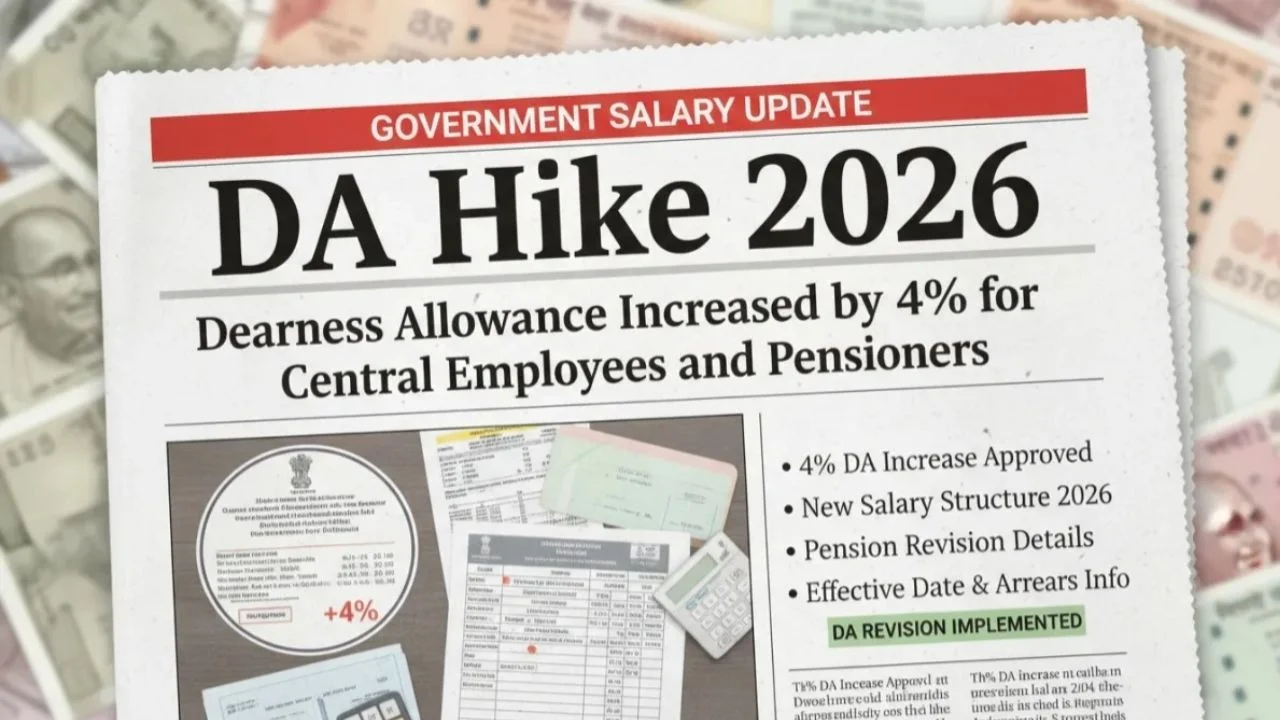
The Central Government has approved a new revision in Dearness Allowance for 2026, bringing financial relief to lakhs of employees and pensioners across the country. This decision comes at a time when rising prices continue to affect household budgets, especially for families that depend on fixed monthly salaries or pensions. Dearness Allowance, commonly known as DA, is revised periodically to reduce the impact of inflation and protect real income.
Although the detailed notification specifying the exact percentage increase and effective date may be released department-wise, the confirmation of the revision itself signals continuity in policy. Even a small increase in DA can result in a noticeable improvement in monthly take-home pay and pension income.
Understanding the Purpose of Dearness Allowance
Dearness Allowance is designed to offset the impact of inflation. It is linked to the All India Consumer Price Index, which measures changes in retail prices of essential goods and services. When inflation rises, the DA component is increased so that employees do not lose purchasing power.

Unlike promotions or annual increments, DA is not linked to performance. It is calculated as a fixed percentage of an employee’s basic pay. For example, if an employee earns a basic salary of Rs 50,000 and the DA is increased by 4 percent, the monthly salary rises by Rs 2,000. Over a year, this translates into an additional Rs 24,000 before tax deductions. The actual amount will vary depending on individual pay levels.
Impact on Pensioners Through Dearness Relief
Retired central government employees receive Dearness Relief, which functions in the same way as DA for serving employees. The approved revision for 2026 will also benefit pensioners under eligible categories. For many senior citizens, pension is the main source of income. Rising costs of healthcare, medicines, and daily essentials can put pressure on limited funds.
For instance, if a pensioner receives a basic pension of Rs 30,000, a 4 percent increase in Dearness Relief would add Rs 1,200 to the monthly pension. While this may appear modest, it helps maintain purchasing power and manage recurring expenses. Family pensioners and individuals under different pension rules may see slightly varied calculations, so reviewing official pension statements is important.
Also Read:
 Government Ration Scheme Update – Free LPG Cylinder and ₹1000 Support for Eligible Families
Possible Arrears and Implementation Process
In many previous DA revisions, the increase was made effective from a past date, with the payment being credited later. If the 2026 hike follows a similar pattern, employees and pensioners could receive arrears for the period between the effective date and the actual implementation date. This would result in a one-time lump sum amount along with the revised salary or pension.
The calculation of arrears depends on several factors, including the effective date, applicable DA percentage, and individual pay structure. Once official circulars are issued, revised rates should appear clearly on salary slips and pension payment orders.
Economic Reasoning Behind the DA Revision
The decision to increase DA is part of a structured policy framework rather than an isolated measure. Government salaries and pensions form a large part of public expenditure. Therefore, each revision must balance employee welfare with fiscal discipline.

By adjusting DA in line with inflation, the government ensures that employees’ real income does not decline over time. At the same time, additional income in the hands of employees can support economic activity through spending in housing, retail, healthcare, and other sectors. Economists often describe DA adjustments as inflation corrections rather than wage expansions.
Connection With Future Pay Commission Discussions
The 2026 DA hike is also being discussed in the context of future pay commission reforms. Historically, when a new Central Pay Commission is implemented, accumulated DA is merged into the basic pay. This restructuring influences salary scales, allowances, and pension calculations.
During previous transitions, such as from the Sixth to the Seventh Pay Commission, accumulated DA played a significant role in resetting the pay matrix. Although there is no confirmed timeline for the next Pay Commission, the level of DA before its introduction could influence future revisions.

What Employees and Pensioners Should Do
Once the revised DA rate is officially notified, employees should carefully check their salary slips to ensure the correct percentage has been applied. If any discrepancy appears, it should be reported to the concerned accounts department or drawing officer. Pensioners should also verify that Dearness Relief has been updated correctly in their bank statements.
Keeping copies of official circulars and notifications is advisable for record purposes. While payroll systems are largely automated, personal verification adds an extra layer of assurance.
Conclusion
The DA Hike 2026 brings timely financial support to central government employees and pensioners. By adjusting salaries and pensions in line with inflation, the government aims to preserve purchasing power and provide stability during periods of rising costs. Although detailed figures and implementation schedules will be clarified through official notifications, the confirmed revision offers reassurance to millions of families who rely on these incomes. In practical terms, this adjustment helps maintain economic balance and ensures continued financial security for employees and retirees alike.

Disclaimer: This article is prepared for informational purposes only. The exact DA percentage, effective date, arrears calculation, and eligibility details are subject to official government notifications and departmental circulars. Employees and pensioners are advised to verify the latest information with their respective offices or authorised government portals before making financial decisions.