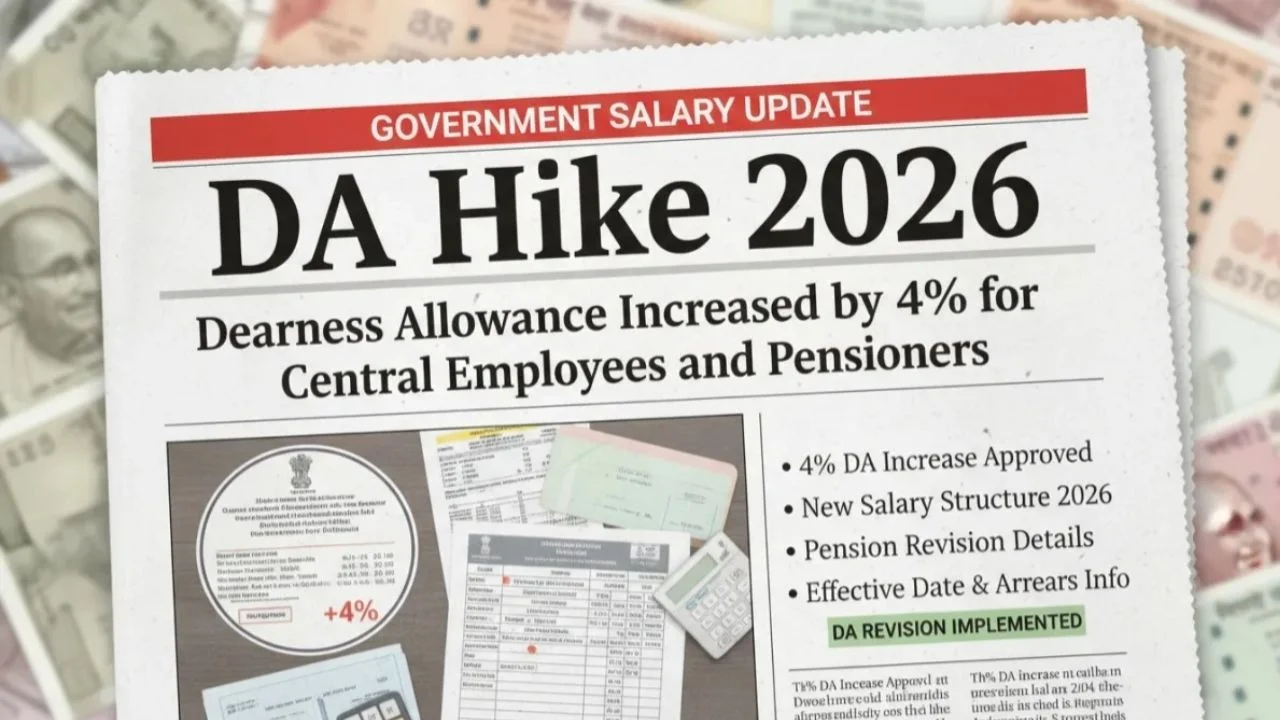
DA Hike 2026 – The Central Government has approved a 4% increase in Dearness Allowance (DA) for its employees and Dearness Relief (DR) for pensioners for the year 2026. This decision brings financial relief to millions of families who depend on government salaries and pensions. At a time when the cost of food, fuel, education, and healthcare continues to rise, this increase is aimed at protecting household income from the effects of inflation.
Dearness Allowance is a part of salary that helps government employees manage rising living expenses. Similarly, Dearness Relief is given to pensioners so that their pension keeps pace with price increases. With this latest revision, the total DA rate rises from the earlier level to 60% of basic pay. Though 4% may appear small at first glance, the actual benefit becomes clear when calculated against individual basic pay.
What the 4% Increase Means in Practical Terms
DA is calculated as a percentage of basic salary. Therefore, the higher the basic pay, the larger the increase in absolute terms. For example, if an employee has a basic salary of ₹50,000 per month, a 4% rise means an additional ₹2,000 every month. Over a year, this amounts to ₹24,000 extra income.
Also Read:
 Property Registration 2026 Alert: New Instant Mutation Rule Makes Ownership Transfer Faster
For junior-level employees, this extra amount can help cover monthly grocery expenses, school fees, or utility bills. For mid-level and senior employees, the increase may support loan repayments, health insurance premiums, or savings plans. Pensioners will also benefit in the same way. Since many retired individuals depend solely on pension income, even a modest rise helps them manage medical costs and daily household needs more comfortably.
How the Government Decides DA Revisions
The increase in Dearness Allowance is not random. It is based on changes in the All-India Consumer Price Index for Industrial Workers, which measures the movement in prices of essential goods and services. When inflation rises consistently, the index reflects that change. Based on a set formula, DA is adjusted to maintain the purchasing power of employees and pensioners.
This system ensures that government pay remains stable in real terms, even when prices go up. It acts as a protective mechanism against inflation. Instead of waiting for major salary revisions, regular DA adjustments help maintain financial balance for public sector workers.

Impact on Pensioners and Retired Employees
For pensioners, the 4% rise comes as Dearness Relief. Since pensions are linked to last drawn salary, the relief is calculated on the basic pension amount. For instance, if a pensioner receives ₹30,000 as basic pension, the 4% increase adds ₹1,200 per month. Over the course of a year, this becomes ₹14,400.
For many senior citizens, this increase can make a meaningful difference. Rising healthcare expenses are often a major concern for retired individuals. Additional monthly income provides some comfort and financial stability.
Possible Arrears and Financial Planning
In many cases, DA hikes are applied from a specific date, even if the official announcement comes later. If that happens, employees and pensioners may receive arrears for the pending months. This lump sum payment can provide temporary financial support and may be used for clearing debts, saving, or meeting important family expenses.

However, it is important to remember that DA forms part of taxable income. A higher DA means higher total income, which may slightly increase tax liability depending on the individual’s tax slab. Employees should review their tax-saving investments under sections such as 80C and 80D to ensure they continue to manage their taxes efficiently.
Connection with the 7th Pay Commission
The current DA structure operates under the 7th Pay Commission framework, which was implemented in 2016. Over time, as DA percentage increases significantly, discussions usually begin about forming the next pay commission. Historically, when DA reaches high levels, it is merged into basic pay during the next pay revision cycle.
While conversations about a possible 8th Pay Commission are ongoing in various forums, no official announcement has been made yet. For now, the focus remains on the immediate benefit provided by this 4% DA increase.

Conclusion
The 4% increase in Dearness Allowance for 2026 offers practical relief to central government employees and pensioners. Though modest in percentage terms, the rise helps families manage rising expenses and maintain their standard of living. By adjusting income in line with inflation, the DA system continues to serve as a financial stabilizer for millions across the country.
Disclaimer: This article is for informational purposes only. The details mentioned are based on publicly available updates regarding the DA increase. Exact figures, effective dates, and arrears payments depend on official government notifications. Readers are advised to refer to official circulars or consult financial advisors for accurate and personalized guidance.