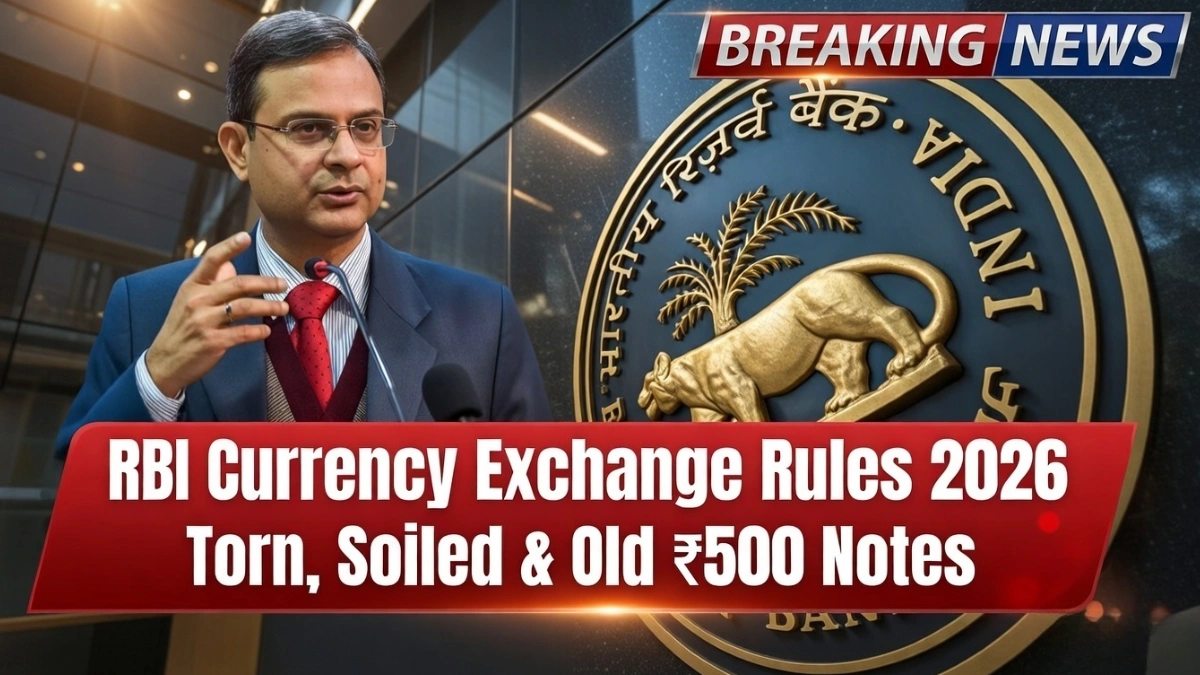
RBI Rules for Exchanging Torn ₹500 Notes in 2026- Many people feel worried when a ₹500 note gets torn, dirty, or damaged. However, there is no need to panic. The Reserve Bank of India has clear rules that allow citizens to exchange damaged currency notes at banks. These rules protect people from losing their hard-earned money simply because a note is torn or soiled. The guidelines issued by the Reserve Bank of India explain how banks should handle damaged notes. According to these rules, banks are required to accept eligible notes and provide the appropriate refund value based on the condition of the note.
Understanding Different Types of Damaged Notes
It is important to know the difference between soiled, torn, and mutilated notes. A soiled note is one that has become dirty due to regular use but is still complete and not missing any parts. These notes are commonly seen in daily transactions and are usually accepted easily at bank counters. A torn note is one that has small cuts or splits. In many cases, the note may be in two pieces, but both pieces are available and clearly match each other. If the entire note is present and the important features are visible, banks generally exchange it for the full value. A mutilated note is more seriously damaged. It may have missing portions or heavy damage. In such cases, the refund depends on how much of the note is available and whether the security features and serial numbers are still visible. The bank checks the note carefully before deciding the refund amount.
Can You Exchange ₹500 Notes in 2026?
In 2026, ₹500 notes that belong to the current legal tender series can be exchanged if they are physically damaged. If your note is only torn, soiled, or partially damaged, you can visit a bank branch and request an exchange. However, it is important to make sure that the note is part of the currently valid series. Old demonetized notes that are no longer legal tender cannot be exchanged unless the Reserve Bank announces a special window for submission. Before visiting the bank, confirm that your note is still legally valid.

How Banks Decide the Refund Value
The refund value depends mainly on the physical condition of the note. If the ₹500 note is slightly torn or soiled but still complete, you will usually receive the full ₹500 value. If the note is in two pieces and both pieces together make the complete note, you are generally entitled to the full amount. In cases where more than half of the note is available, the bank may provide full or partial value according to official guidelines. If a very small portion of the note is presented and important details are missing, the note may not qualify for exchange. Banks follow minimum area requirements set by the Reserve Bank before approving the refund.
Where You Can Exchange Damaged Notes
Most public and private sector banks accept soiled and slightly torn notes at their counters. You do not need to have an account with the bank to exchange small numbers of damaged notes. The service is available to all citizens. For heavily mutilated notes, some designated branches known as currency chest branches handle the exchange process. In normal cases, customers are not required to fill out long forms for small exchanges. However, if someone brings a large quantity of damaged notes, the bank may record details and ask for identification for verification purposes.
Can a Bank Refuse to Exchange a Damaged Note?
Banks are not allowed to refuse valid damaged notes that meet the official criteria. If a note satisfies the conditions set by the Reserve Bank, the bank must accept it. If a bank refuses without a proper reason, the matter can be reported to higher banking authorities. However, there are exceptions. Notes that are deliberately cut, burned, altered, or defaced may be rejected. It is also important not to tape unrelated paper to the note or change the serial number. Present the note in its original damaged condition without attempting to repair it in a misleading way.

Important Points to Remember
There is generally no fee for exchanging damaged notes within permitted limits. Citizens should always approach banks directly instead of using middlemen. This ensures a safe and legal process. Understanding these rules helps people avoid unnecessary financial loss. The Reserve Bank’s guidelines are designed to protect citizens and maintain trust in the currency system.
Conclusion
Under the RBI Currency Exchange Rules 2026, citizens have the legal right to exchange torn, soiled, or partially damaged ₹500 notes at authorized bank branches. The refund amount depends on the condition and visible portion of the note, but a valid legal tender cannot be rejected without a proper reason. Knowing your rights ensures that you can confidently handle damaged currency and receive the correct value without difficulty.
Disclaimer- This article is for informational purposes only. Currency exchange rules are governed by official notifications issued by the Reserve Bank of India and may change over time. Individuals are advised to confirm the latest guidelines with authorized bank branches or official RBI communications before proceeding with any damaged note exchange.