Huge Boost in 2026 : In 2026, pension updates have created a lot of discussion among senior citizens, widows, and financially vulnerable groups who depend heavily on monthly government support. With everyday expenses going up — from groceries to medicines — many pensioners have been struggling to manage within limited income. Because of this, both central and state governments have reviewed their existing welfare schemes and announced revisions aimed at improving financial security.
It is important to understand one key point: there is no single fixed pension amount that applies across the entire country. Pension payments usually combine a central government contribution with additional support from state governments. This means the final amount a person receives depends largely on where they live and under which category they qualify.
How the 2026 Pension Revision Works
India’s pension structure works through a shared system. Under national welfare programs like the National Social Assistance Programme, the central government provides a base pension amount. State governments then add their own contribution on top of that base, depending on their budget and policy priorities.

The 2026 revision does not replace the old system but builds on it. States that have the financial capacity may increase their share, resulting in a higher total monthly pension for beneficiaries in those states. This layered structure explains why some headlines may mention larger amounts while others report smaller increases. Two beneficiaries in different states can receive different pension totals even if they fall under the same category.
Revised Monthly Amounts: What People May Actually Receive
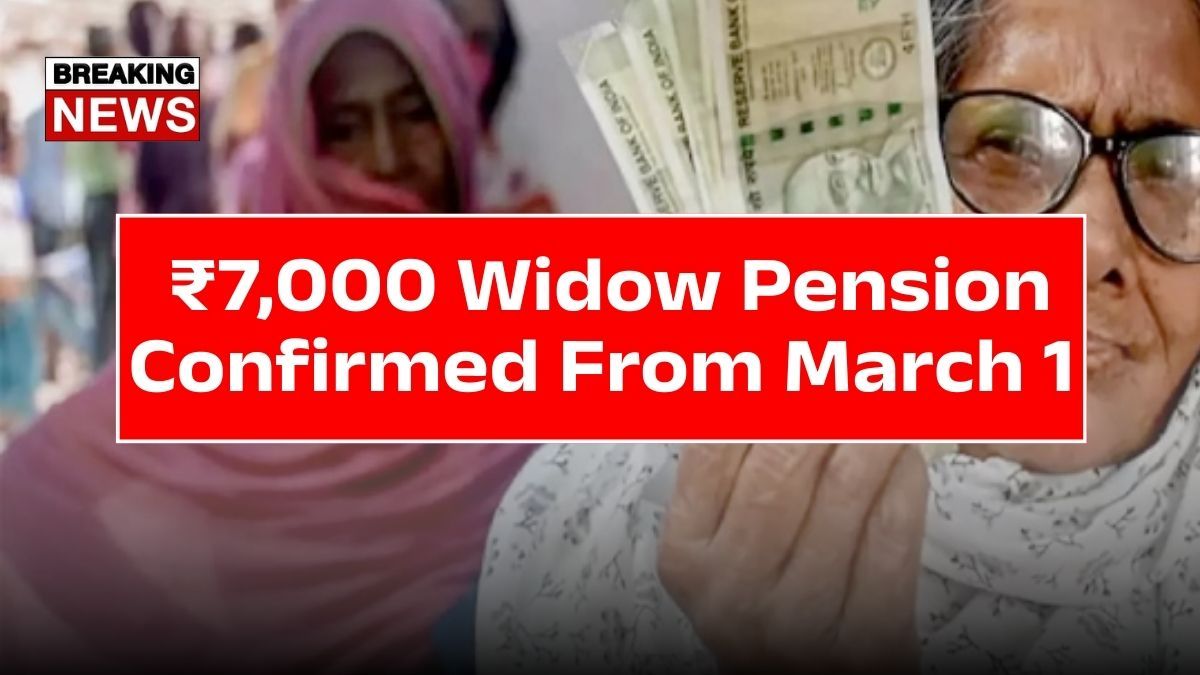
After the 2026 revision, some states have increased their additional contribution, which may push the total monthly pension closer to ₹5,000, ₹6,000, or even ₹7,000 in certain categories. However, this does not mean that every senior citizen or widow across India will receive ₹7,000.
For example, if someone was earlier receiving ₹1,000 or ₹1,500 per month, the new structure in some states may increase it by a few hundred or even a couple of thousand rupees. In other states, the increase may be smaller. The total depends on age group, widow status, disability category, income limits, and state-specific schemes.

Because of these variations, beneficiaries should always verify the updated amount through official state welfare portals or local social welfare offices rather than relying on general social media messages.
Why Pension Amounts Were Increased
One of the main reasons for the pension revision is inflation. Over the past few years, the cost of living has increased steadily. Expenses such as medicines, doctor visits, electricity bills, rent, and essential household items have become more expensive. For people who depend entirely on pension income, even small price increases can create serious financial stress.
Policy makers have recognized that fixed pension amounts lose value over time if they are not revised periodically. By increasing pension support, governments aim to protect vulnerable groups from losing purchasing power. While the revised amounts may not fully match inflation, they are meant to provide at least partial relief and improve basic financial stability.

Direct Benefit Transfer System Continues in 2026
In 2026, pension payments continue to be made mainly through the Direct Benefit Transfer (DBT) system. Under DBT, money is deposited directly into the beneficiary’s bank account. This reduces delays, minimizes corruption, and improves transparency in fund distribution.
To avoid interruptions in payment, beneficiaries must ensure that their Aadhaar is properly linked to their bank account and that KYC details are updated. In many pension schemes, submission of a life certificate is also mandatory at regular intervals. If these formalities are not completed, pension payments may be temporarily stopped until records are updated.
Growing Use of Digital Services for Pension Management
Another noticeable change in 2026 is the wider use of digital platforms for pension services. Many states now allow pensioners to check payment status online, update personal details, and submit life certificates through digital systems. This reduces the need to visit government offices repeatedly.

At the same time, authorities understand that not all elderly citizens are comfortable with digital tools. Therefore, offline support through local welfare offices, banks, and service centres continues to be available. The aim is to ensure that no eligible person is excluded due to lack of digital knowledge.
Key Things Beneficiaries Should Verify
Beneficiaries should regularly check that their bank account is active and correctly linked with Aadhaar. If they have changed address, mobile number, or bank branch recently, those details must be updated without delay.
New applicants should carefully review eligibility rules, including income limits and age criteria, as these can vary from one state to another. It is also important to understand that no single nationwide pension figure applies to everyone. The widely discussed ₹7,000 figure may reflect combined central and state support in select regions, not a uniform national rate.

Financial Impact on Vulnerable Households
For many elderly citizens and widows, pension payments are the primary or only source of income. Even a modest increase can help cover essential needs such as medicines, food, and utility bills. In rural areas especially, social pensions play a crucial role in preventing extreme financial hardship.
An increase toward higher monthly support levels can reduce dependency on family members and lower the risk of debt. While pensions may not eliminate financial challenges completely, they provide a stable base income that supports dignity and independence in old age.
Overall Outlook for 2026
The 2026 pension revision reflects an effort to strengthen India’s social safety net. By allowing states to enhance their contributions while maintaining central support, the government aims to balance financial responsibility with social welfare needs. Although the exact benefit amount varies by region, the direction is clearly toward improving income security for vulnerable populations.

Beneficiaries are encouraged to stay updated through official announcements, verify their records regularly, and avoid believing unverified claims about uniform nationwide pension hikes. Proper documentation and awareness are key to receiving the correct benefits without interruption.
Disclaimer: This article is intended for informational purposes only and does not represent an official government notification. Pension amounts, eligibility rules, and payment timelines vary by state and individual category. Readers are strongly advised to verify all updates through official government websites, welfare departments, or authorized local offices before making financial decisions or submitting applications. The author assumes no responsibility for actions taken based solely on this content.