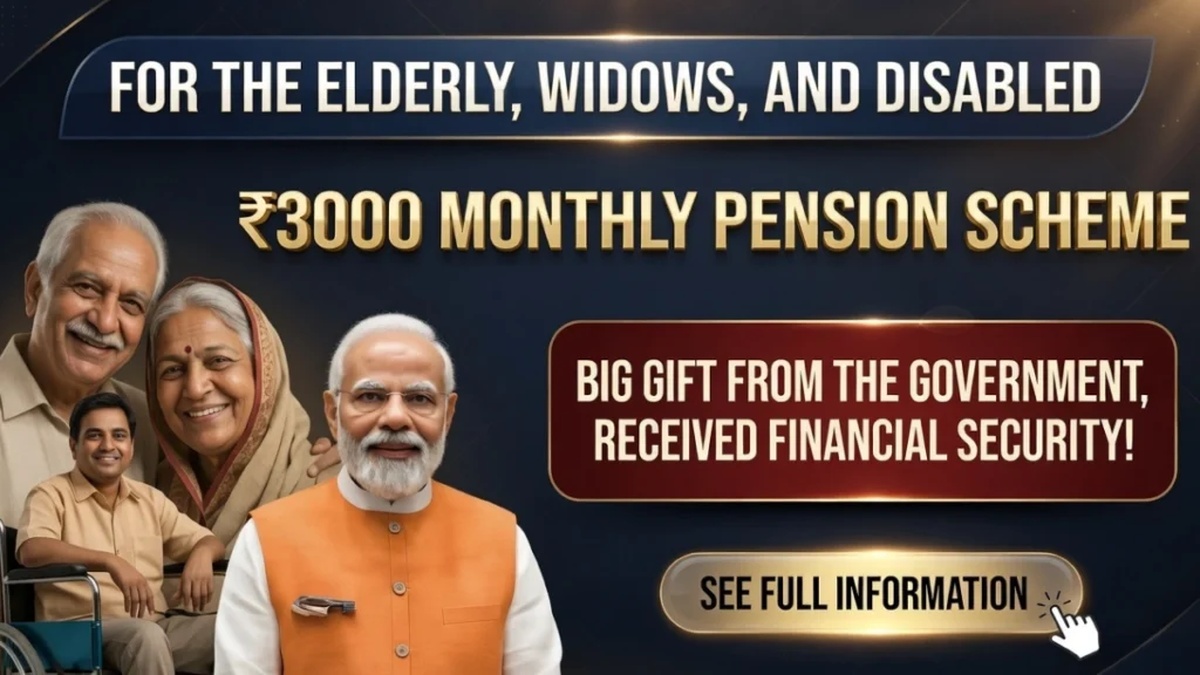
₹3,000 Monthly Pension Support in 2026- In 2026, the government announced an important update to its social welfare programs by introducing a revised pension structure. Under this new plan, eligible beneficiaries may receive up to ₹3,000 per month as financial support. This initiative is designed to provide steady income assistance to senior citizens, widows, and persons with disabilities who are facing financial difficulties. The announcement has brought hope to millions of families who depend on such schemes for their daily needs.
Purpose of the Revised Pension Scheme
The main goal of this pension support is to strengthen the social security system and ensure that vulnerable groups are not left without financial help. Rising living costs and healthcare expenses often create serious challenges for elderly citizens and low-income households. By increasing the monthly pension amount to ₹3,000, the government aims to reduce financial stress and improve the quality of life for beneficiaries. This regular support can help individuals manage essential expenses such as food, medicines, and other daily requirements.
Eligibility Criteria for Beneficiaries
The pension benefit is mainly intended for senior citizens who have crossed the prescribed age limit set by the authorities. Widows belonging to economically weaker sections are also eligible under the scheme. In addition, persons with disabilities, often referred to as Divyang beneficiaries, can apply if they meet the required income conditions. Applicants must fulfill certain income criteria defined by the government. Proper documentation is necessary to confirm eligibility. Individuals must provide valid identification proof, income certificates, and category-specific documents such as disability certificates or proof of age. It is important for applicants to ensure that all details submitted are accurate and up to date to avoid delays in approval.

Direct Benefit Transfer for Smooth Payments
The pension amount will be credited directly into the beneficiary’s bank account through the Direct Benefit Transfer system. This method ensures transparency and reduces the chances of delays or misuse of funds. Aadhaar linkage with an active bank account is mandatory for receiving the pension without interruption. Monthly payments are expected to be deposited regularly. However, the exact processing timeline may vary depending on state administration and verification procedures. Beneficiaries are advised to keep their bank details updated and ensure that their Aadhaar information is correctly linked to prevent payment issues.
Estimated State-Wise Distribution
The scheme is expected to benefit a large number of people across various states. For example, states like Uttar Pradesh, Maharashtra, Bihar, Madhya Pradesh, Rajasthan, and Karnataka may have millions of beneficiaries receiving the ₹3,000 monthly pension. Although the estimated numbers vary from state to state, the payment method remains the same, which is direct bank transfer. These estimates show the wide reach of the scheme and its potential impact on society.
Required Documents for Application
To apply for the pension, individuals must submit essential documents. Aadhaar card details are necessary for identity verification. Bank account information is required for direct transfer of funds. Income proof must be provided to confirm eligibility under the income limits. Senior citizens need to show proof of age, while persons with disabilities must provide a valid disability certificate. Widows may need to submit relevant documents confirming their status. Accurate documentation is crucial for smooth processing. Any mismatch or incorrect information may result in the temporary suspension of benefits until corrections are made. Therefore, applicants should carefully review their documents before submission.

Expected Impact on Society
The ₹3,000 monthly pension support is expected to bring significant relief to many families. For elderly citizens who do not have a regular source of income, this financial aid can provide stability and dignity. Widows and persons with disabilities often face economic hardship, and regular assistance can help them maintain basic living standards. Beyond financial help, the scheme also promotes financial inclusion. By ensuring that beneficiaries have bank accounts linked to Aadhaar, the initiative encourages participation in the formal banking system. This step strengthens transparency and builds trust in public welfare programs.
Disclaimer- This article is written for informational purposes only. Pension eligibility, benefit amounts, and payment schedules may vary according to official government rules and state-specific guidelines. Applicants are advised to check with their respective state social welfare departments or official government portals for the most accurate and updated information.